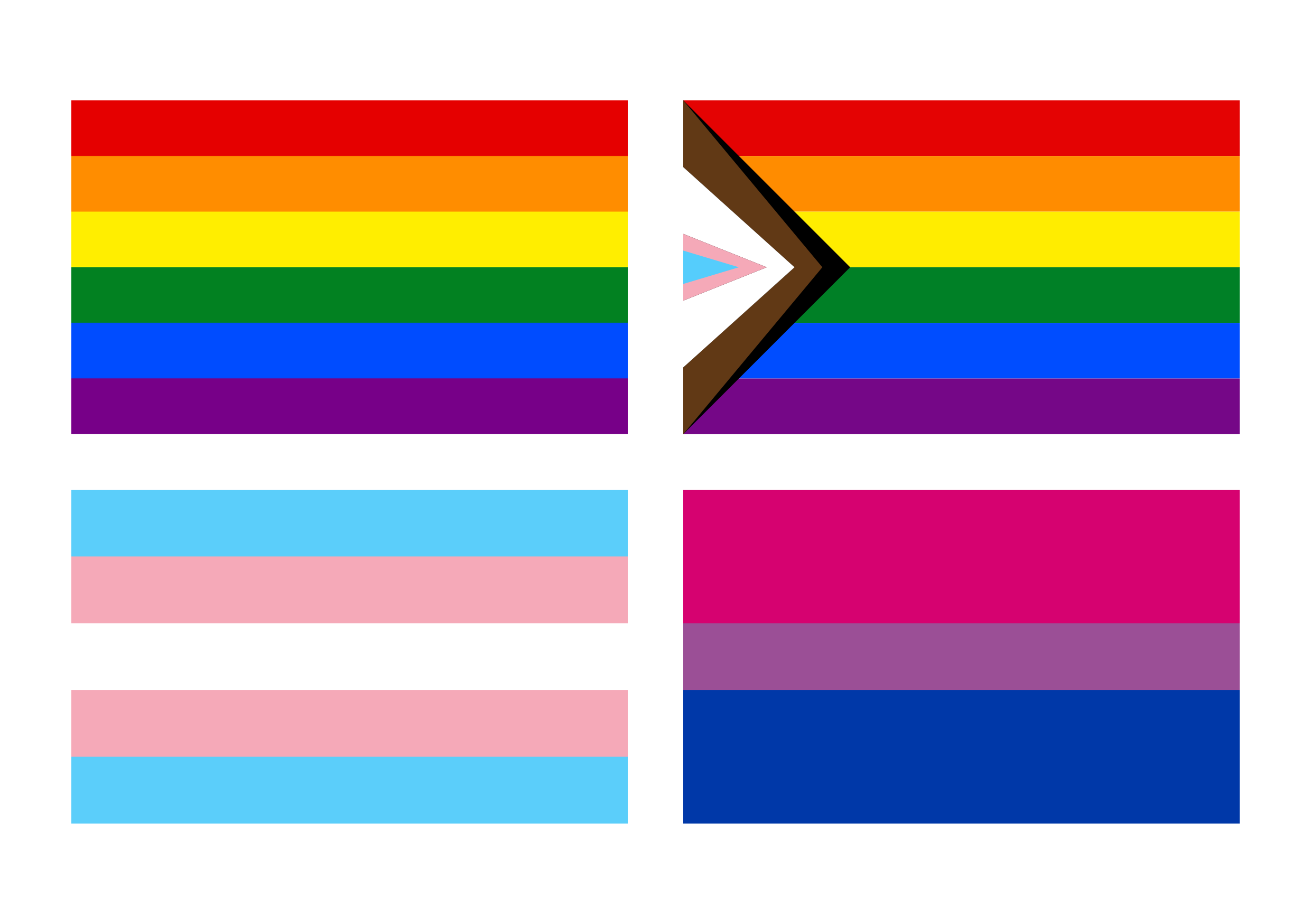
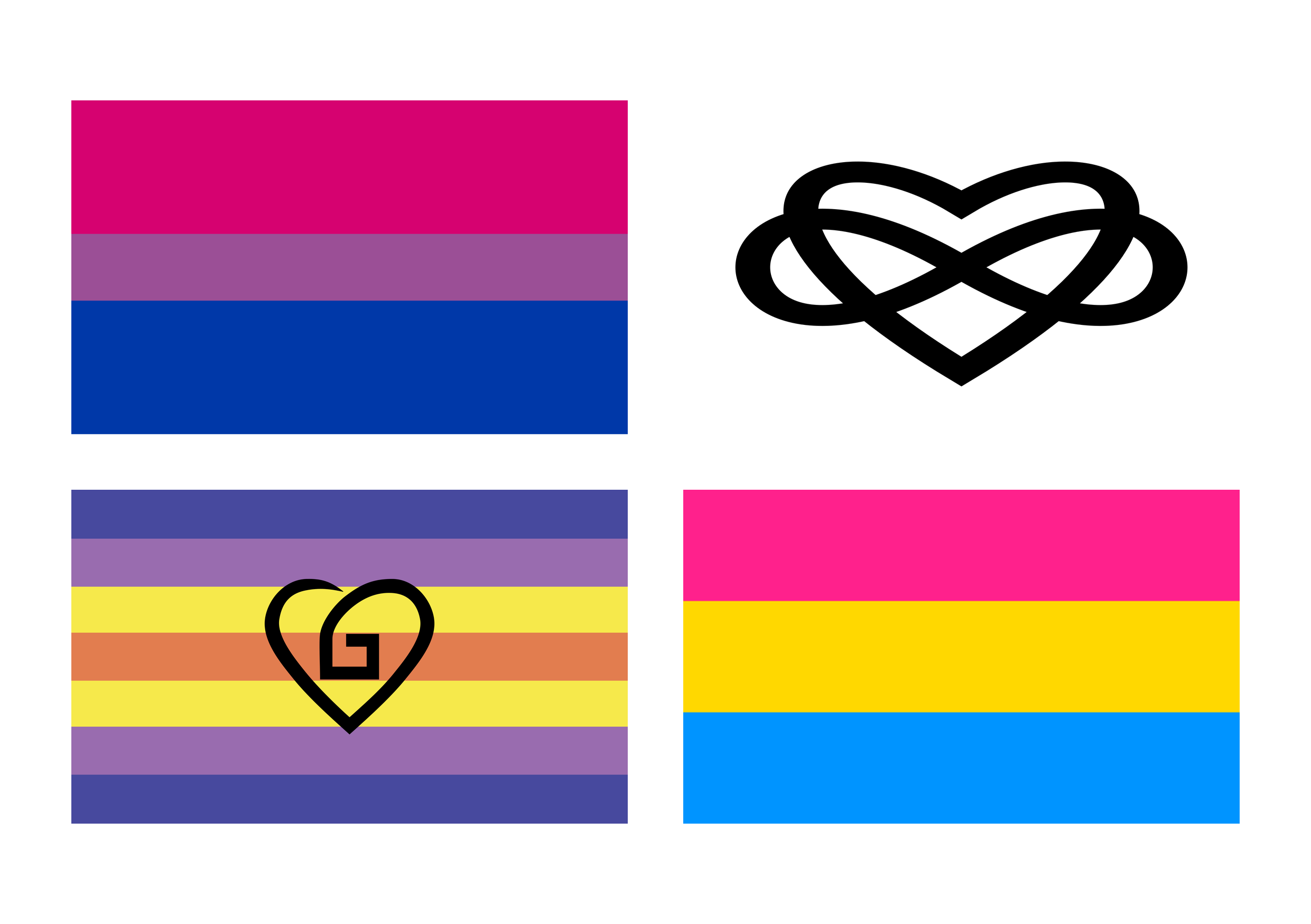
A three-striped flag representing bisexual identity, with pink and blue stripes representing same and different-gender attraction, and a blended lavender center symbolizing bisexuality.
Pink represents attraction to people of the same gender; blue represents attraction to people of different genders; lavender (the overlap) represents attraction to both.
History
The Bisexual Pride Flag was designed by Michael Page in 1998 as a response to bisexual invisibility within LGBTQ+ spaces. Page, a bisexual activist, created the flag to provide bisexual people with a distinct visual symbol comparable to the rainbow flag, addressing the phenomenon of bisexual erasure where bisexual individuals were often perceived as "really" gay or straight depending on their current relationship. The flag was unveiled on December 5, 1998, through the website BiCafe.
The flag's three horizontal stripes carry specific symbolic meaning derived from the "biangles" symbol that preceded it. The pink stripe represents attraction to the same gender, the blue stripe represents attraction to different genders, and the lavender stripe in the center represents the blending of both attractions and the fluidity of bisexual identity. The proportions were deliberately specified, with pink and blue each comprising two-fifths of the flag and lavender occupying one-fifth, creating a visual representation of the overlapping nature of bisexuality.
Since its creation, the Bisexual Pride Flag has become the most widely recognized symbol of bisexual identity worldwide. Its visibility increased significantly during bisexual visibility campaigns of the 2000s and 2010s. The flag's design is notable for its intentional encoding of meaning in every element, with the color blending serving as a metaphor for the attraction spectrum that defines bisexuality. While some alternative designs have been proposed, Page's flag remains the standard symbol for the bisexual community.