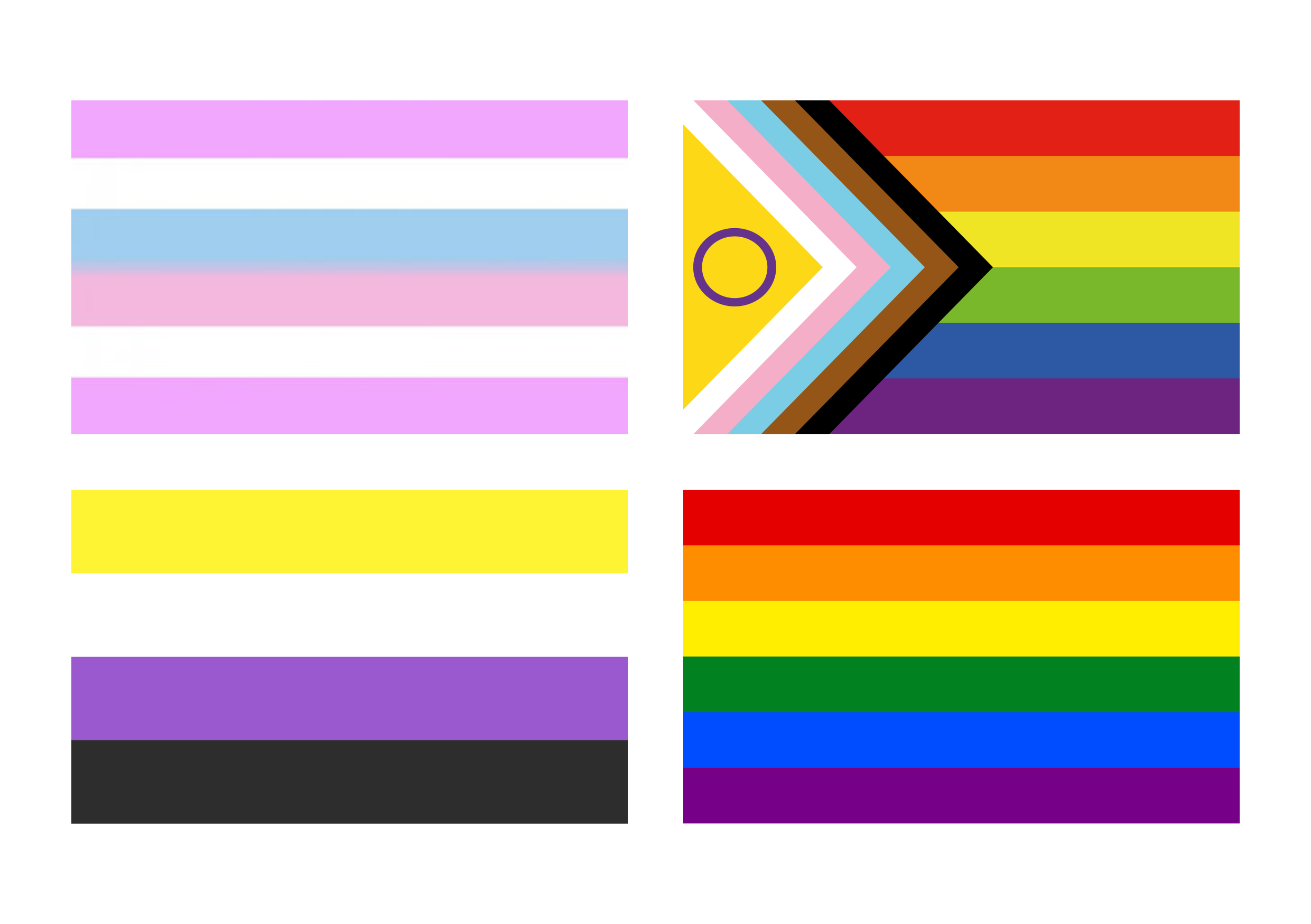
A flag for intersex people—those born with bodies (chromosomes, hormones, or anatomy) that don't fit typical definitions of male or female.
intersectionallavenderwhitebluepink2000s
Designer
Natalie Phox
Year Created
2009
First Flown
2009
Stripe Count
5 stripes
Colors & Meanings
lavenderwhitebluepink
These colors represent important ideas connected to this flag and community.
History
The intersex pride flag represents intersex people—those born with bodies (chromosomes, hormones, or anatomy) that don't fit typical definitions of male or female. Natalie Phox created the flag in 2009 to give the intersex community a recognizable symbol of its own. The lavender stripes represent a blend of traditionally male and female characteristics, the white stripes represent neutrality, and the central blue-to-pink gradient stripe represents the spectrum of sex characteristics that exists between and beyond male and female.