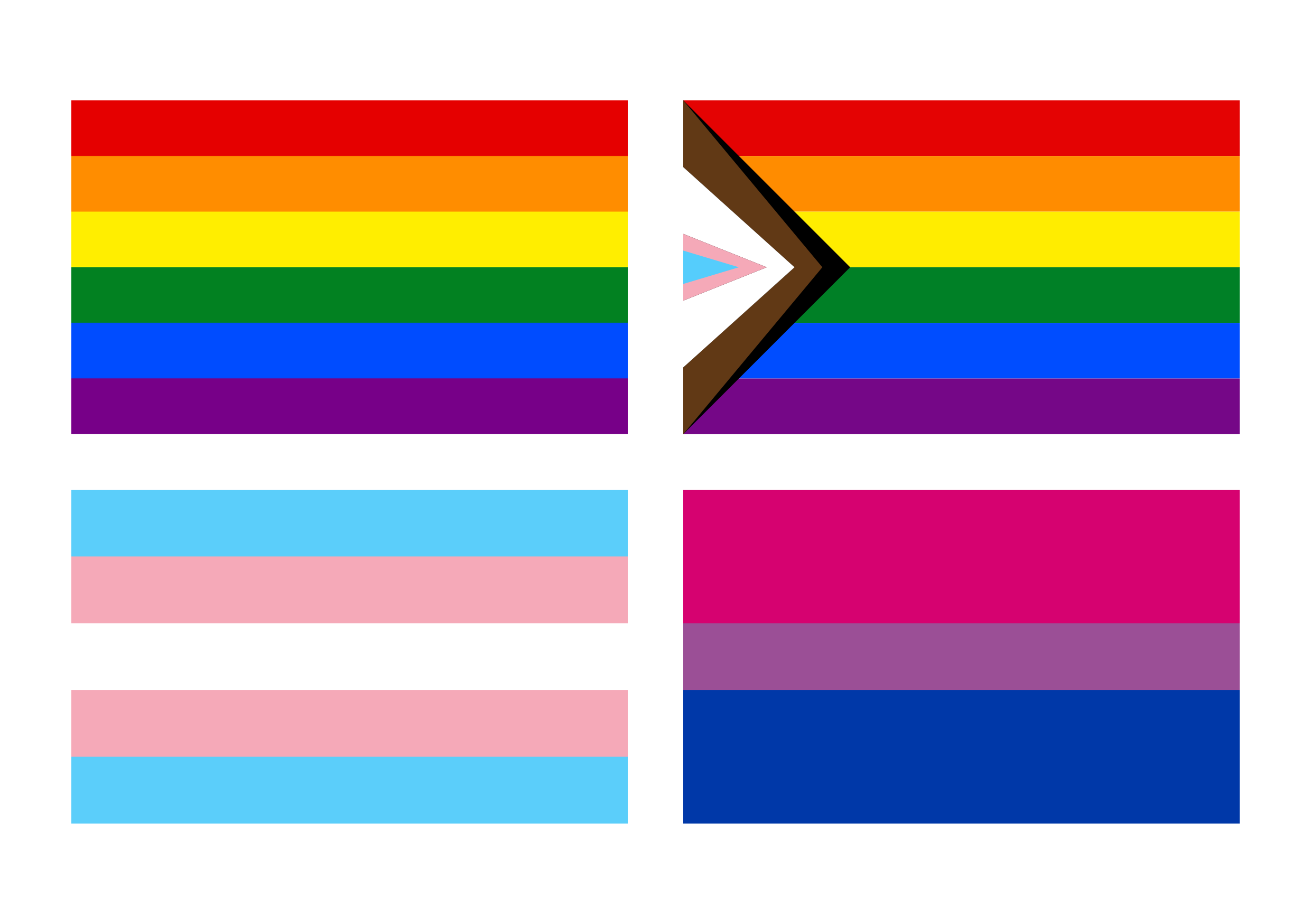
Light blue is the traditional color for baby boys; pink for baby girls; white represents those who are transitioning, non-binary, or intersex.
History
The Transgender Pride Flag was designed by Monica Helms, a transgender woman and US Navy veteran, in 1999. Helms created the flag after meeting Michael Page, designer of the bisexual pride flag, at a Pride event in Phoenix, Arizona, who encouraged her to develop a symbol specifically representing the transgender community distinct from the broader rainbow flag. The flag features five horizontal stripes with a deliberate palindromic structure: light blue (representing traditional Western associations with boys), pink (representing traditional associations with girls), white (representing those transitioning, identifying as non-binary, or intersex), and the pattern repeated in reverse. This symmetrical design reflects Helms' intention to symbolize that transgender people find peace and consistency regardless of direction—a rare vexillological property. The flag was first publicly flown at the 2000 Phoenix Pride parade, where Helms carried it while it gradually gained recognition through parades and LGBTQ+ spaces. Over the following decades, the transgender pride flag became one of the most widely recognized flags within the broader pride movement, achieving global visibility as awareness of transgender identity and rights expanded. In 2014, Helms donated the original flag to the Smithsonian Institution's National Museum of American History, cementing its status as a significant artifact of American social history. Today, the transgender pride flag is frequently displayed alongside the rainbow flag as a paired symbol of LGBTQ+ visibility and advocacy.