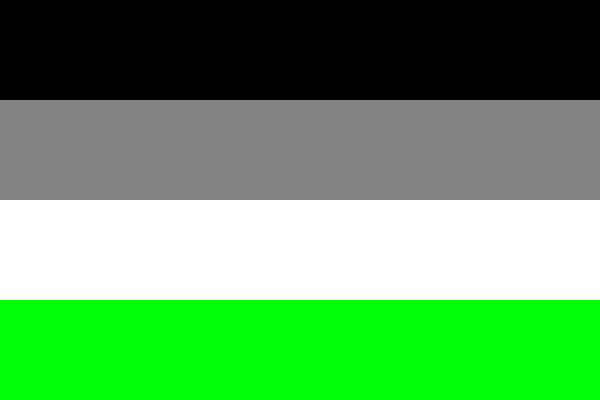
These colors represent important ideas connected to this flag and community.
History
The four-stripe agender pride flag emerged as a simplified alternative to the original seven-stripe agender flag design. The original seven-stripe flag, created to represent the agender identity (those who experience little to no gender identity), featured stripes representing specific concepts. This four-stripe variant serves as a streamlined homage to that foundational design, maintaining the core color symbolism while reducing complexity. The flag uses lime green to represent outside the binary, gray for neutral gender identity, white for all genders, and black for the absence of gender. The four-stripe version has found adoption in certain agender communities seeking a more minimalist representation of their identity. Both versions coexist in contemporary pride flag usage, with individuals and groups choosing based on personal preference and community norms.